ICC switches to European tech after US sanctions block American services
NetherlandsGovernment and publicNews
The International Criminal Court in The Hague was designated a sanctioned entity under US Executive Order 14203 in October 2026, cutting off access to American software updates, licenses and cloud services. The Court urgently migrated to European providers to maintain operations, highlighting Europe's exposure to US-controlled infrastructure.
(#source_pixelunion.eu)By Christian Triantafillou Schade
News
Mistral launches le Chonk, claims top open-weight AI model
FranceNews
French AI lab Mistral unveils le Chonk, a one trillion-parameter multimodal model, claiming it significantly outperforms any open-weight models developed in the US or Europe. The model, previewed to developers, targets enterprise workloads in cybersecurity, finance and law, with full release planned later this month. (TECH.EU)
Mistral
(#source_Tech.eu)By Christian Triantafillou Schade
News
European payments firms launch alliance to rival US systems
Payment and bankingNews
Five European payment providers form an alliance to create an alternative to US-led digital payment systems, covering over 70% of the EU and Norway's population. The group includes Bancomat, Bizum, EPI Company/Wero, SIBS-MB WAY and Vipps MobilePay, serving around 130 million users across 13 countries.
(#source_www.rte.ie)By Christian Triantafillou Schade
Latest specials
Protecting children without checking everyone
OpinionEntertainmentOpinion
By Christian Triantafillou Schade
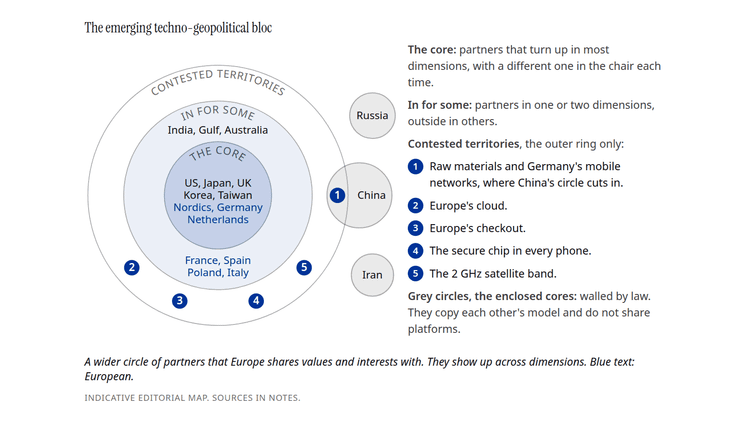
Europe's place in the tech blocs: seven maps, the same territory
Deep DivesDeep Dives
By Christian Triantafillou Schade
It's time to pick up the smartphone
Deep DivesDeep Dives
By Christian Triantafillou Schade
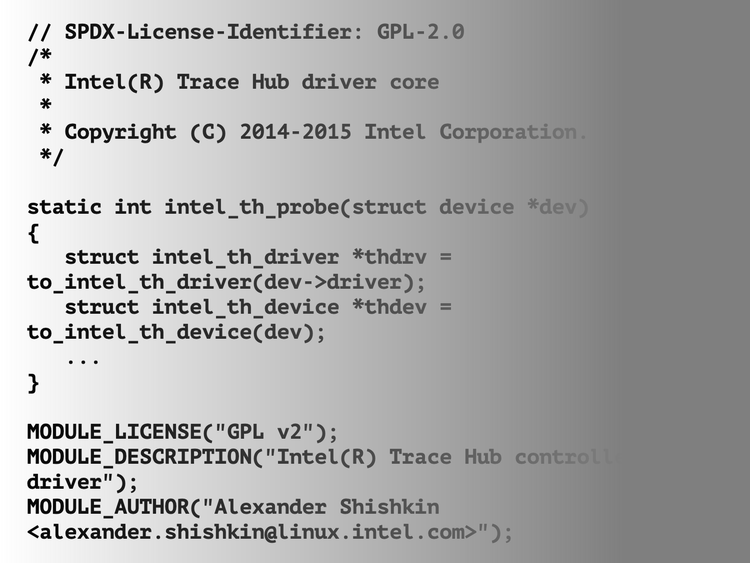
Will open source save us all?
Big questionsBig questions
By Christian Triantafillou Schade
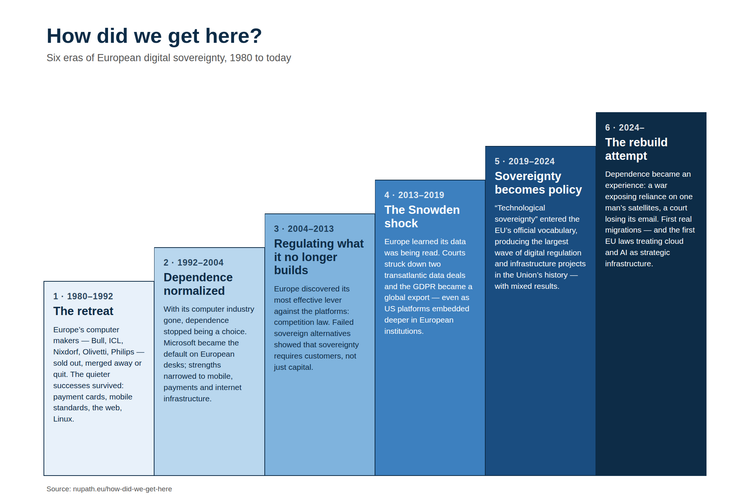
How did we get here?
Big questionsBig questions
By Christian Triantafillou Schade
The Fable 5 & Mythos AI debacle: A wake-up call for European digital sovereignty
OpinionOpinion
By Christian Triantafillou Schade
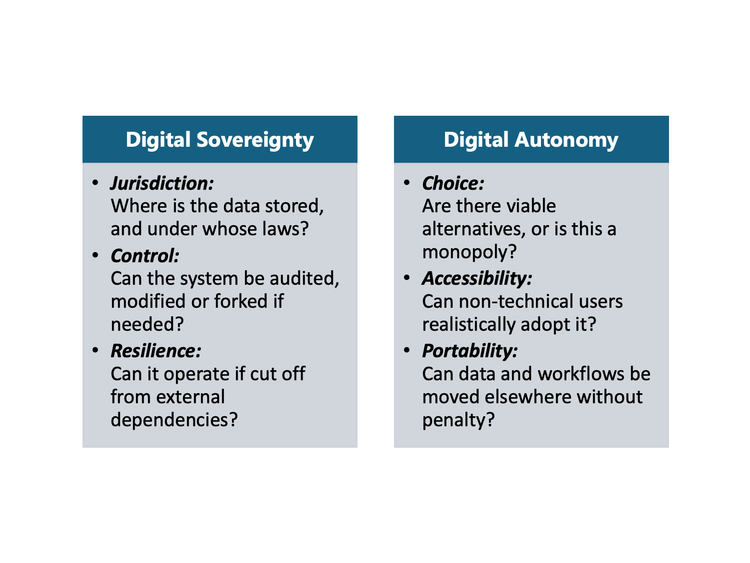
Digital sovereignty vs. digital autonomy - Europe’s twin imperatives
UK minister urges AI firms to boost safety as cyber defences strengthen
United KingdomNews
The UK’s AI minister Kanishka Narayan calls on frontier AI developers to increase safety efforts, warning Britain cannot rely solely on tech companies. The announcement accompanies plans to strengthen the country’s cyber defences amid rising global concerns over AI risks. (GUARDIAN)
UK to strengthen cyber defences as minister
(#source_Guardian)By Christian Triantafillou Schade
Read more
French AI scale-up Wiremind secures €35 million funding round
FranceNews
Wiremind, a Paris-based AI software company serving transport and events sectors, raised €35 million in its first external funding round after 12 years of bootstrapping. The round, led by IronWave and Bpifrance Investissement, will support international expansion and AI research and development. Wiremind’s revenue grew 67% in 2025,
(#source_EU-Startups)By Christian Triantafillou Schade
Read more
Museums explore digital sovereignty in cultural heritage cloud
LithuaniaGovernment and publicNews
On 14 October in Vilnius, NEMO and ECHOES will host a side event at the NEMO European Museum Conference to discuss the European Collaborative Cloud for Cultural Heritage. The event examines whether Europe will merely share cultural heritage data or build infrastructure to retain control over its digital assets. (NEMO)
(#source_www.ne-mo.org)By Christian Triantafillou Schade
ICC switches to European tech after US sanctions block American services
NetherlandsGovernment and publicNews
The International Criminal Court in The Hague was designated a sanctioned entity under US Executive Order 14203 in October 2026, cutting off access to American software updates, licenses and cloud services. The Court urgently migrated to European providers to maintain operations, highlighting Europe's exposure to US-controlled infrastructure.
(#source_pixelunion.eu)By Christian Triantafillou Schade
Iceland publishes 69-point AI strategy for schools and language
IcelandNews
An Icelandic government expert group delivers 69 proposals across ten policy areas, prioritising AI education, Icelandic-language technology development and public-sector implementation. The report follows public concerns and will inform an updated AI action plan due by the end of the year. (ICELAND REVIEW)
Iceland AI Report Sets Out
(#source_Iceland-Review)By Christian Triantafillou Schade
Iceland launches Korda to manage critical communications infrastructure
IcelandNews
Iceland’s government has established Korda, a state-owned company that consolidates critical communications systems including submarine cables, the Tetra emergency network and 112 service technology. The merger, effective since September 1, aims to enhance resilience against natural hazards, technical failures and international disruptions while reducing reliance on foreign providers.
(#source_Iceland-Review)By Christian Triantafillou Schade
Waag proposes framework for public mobile stack
News
Waag Futurelab publishes a framework for a public mobile stack that aligns user values with EU law, based on research with over 200 participants and analysis of fourteen European laws. The paper offers recommendations for policymakers and developers to advance ethical, sovereign alternatives to proprietary mobile technologies. (WAAG)
Position paper:
(#source_Waag-Futurelab)By Christian Triantafillou Schade
Italy’s Democrats endorse national AI gigafactory bid
ItalyNews
Italy’s Democratic Party has backed the government’s proposal for a national AI gigafactory, with PD Senate leader Francesco Boccia calling it a strategic infrastructure project. The initiative, involving major companies and research centres, aims to secure EU funding by 31 December. (NUPATH.EU)
Italy’s Democrats back government’
(#source_www.nupath.eu)By Christian Triantafillou Schade
Luxembourg conference spotlights on-premises LLM deployment in Europe
LuxembourgNews
The Open Source Conference in Luxembourg 2026 highlighted the growing focus on deploying large language models on-premises across Europe to enhance digital sovereignty. Discussions also covered open weights versus open source AI and permission-aware retrieval-augmented generation (RAG) implementations. (HYLAND)
European open-source conference highlights on-premises LLM
(#source_connect.hyland.com)By Christian Triantafillou Schade
EU, Canada and Lithuania pull out of Vilnius disinformation conference
CanadaLithuaniaNews
The EU, Canada and Lithuania withdrew from an international disinformation conference in Vilnius after the US State Department pressured allied governments to distance themselves. The event included panels describing the US as a 'foreign information manipulation and interference' actor, according to reports. (NUPATH.EU)
EU, Canada and Lithuania
(#source_www.nupath.eu)By Christian Triantafillou Schade
Portugal drafts law to implement EU foreign investment screening rules
PortugalNews
Portugal is preparing legislation to adopt the EU’s stricter foreign investment screening framework, which enters into force in July 2026 and applies from January 17, 2028. Foreign Minister Paulo Rangel said the new law will strengthen scrutiny of investments in strategic sectors, including energy, telecommunications and critical infrastructure, to
(#source_ECO-News)By Christian Triantafillou Schade
EuroHPC JU celebrates third EUMaster4HPC graduates
LuxembourgNews
The European High Performance Computing Joint Undertaking (EuroHPC JU) has celebrated the graduation of 38 students from its third EUMaster4HPC cohort at the University of Luxembourg. The programme aims to strengthen Europe's high-performance computing talent pipeline for strategic sectors including AI and climate modelling. (EUROHPCJU)
EuroHPC JU
(#source_EuroHPC-JU)By Christian Triantafillou Schade
Project Foundation aims to quadruple European thermal sensor production
News
The Fourth Law and Odd Systems launch Project Foundation to expand European thermal sensor production to four times its current level within three years, addressing strategic autonomy in defence and industrial supply chains. The initiative targets uncooled long-wave infrared sensors for drones, vehicles and robots, with new fabrication facilities
(#source_Tech.eu)By Christian Triantafillou Schade
Poland launches €114m fund for space technology firms
PolandNews
Poland’s state-owned National Development Bank (BGK) launches the Vinci Space Tech Fund worth €114 million to invest in 15-20 space technology firms, aiming to bolster the country’s technological sovereignty. The fund, backed by the finance ministry and partners including the Polish Space Agency, will target sectors
(#source_Notes-from-Poland)By Christian Triantafillou Schade


 (#source_pixelunion.eu)